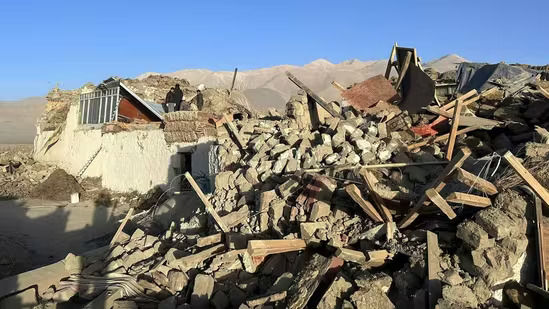
A strong earthquake struck the northern foothills of the Himalayas near Tibet’s Xigaze city on Tuesday, leaving 95 people dead and over 130 injured. The magnitude 6.8 quake caused widespread destruction, with buildings collapsing and tremors felt across neighboring countries like Nepal, Bhutan, and India.
Details of the Earthquake
The earthquake occurred at 9:05 a.m. local time (0105 GMT) in Tingri County, a rural area near Mount Everest’s northern gateway. The China Earthquake Networks Center (CENC) reported the quake had a depth of 10 kilometers (6.2 miles). This region is known for its geological activity due to the collision of the Indian and Eurasian tectonic plates.
Impact on the Region
National broadcaster CCTV confirmed that all 95 fatalities occurred on the Tibetan side. Dingri County, which lies close to the Nepal border, was severely affected. Communities near the epicenter, about 380 kilometers (240 miles) from Lhasa, faced significant damage. At least half a dozen aftershocks with magnitudes between 4 and 5 were recorded within an hour.
Tremors Felt Across Borders
The quake was powerful enough to shake areas beyond Tibet. Tremors were reported in Delhi-NCR and several parts of North India, including Bihar. The United States Geological Survey (USGS) noted that a related magnitude 7.1 earthquake in Nepal contributed to the tremors felt across the region.
Historical Context
This is the strongest earthquake recorded within a 200-kilometer radius in the last five years. In comparison, the 2015 Nepal earthquake, with a magnitude of 7.8, killed nearly 9,000 people and injured over 22,000, highlighting the region’s vulnerability to seismic activity.
Response and Challenges
Regional disaster relief teams are working to rescue survivors and provide aid to the injured. However, the mountainous terrain poses challenges to relief operations. Officials are closely monitoring aftershocks and assessing the long-term impact on the area.
This tragedy serves as a reminder of the region’s geological risks and the importance of preparedness in such disaster-prone zones.
ALSO READ-


Leave a Reply