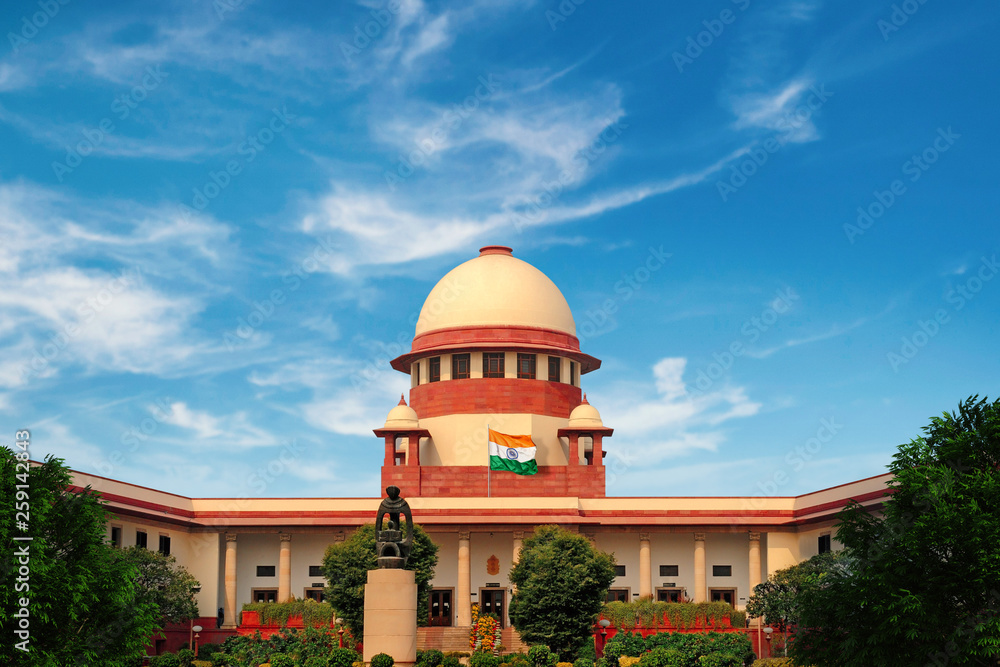
The Supreme Court of India has made a strong statement regarding the use of firecrackers during festivals. On Monday, the Court observed that no religion encourages activities that cause pollution or harm the environment. This remark was part of the Court’s ongoing efforts to address the serious issue of air pollution in Delhi, particularly during the festival season, when the use of firecrackers significantly worsens air quality. The Court emphasized that the right to live in a pollution-free environment is a fundamental right under Article 21 of the Indian Constitution. This ruling underscores the importance of protecting both the environment and public health from the harmful effects of pollution.
The Supreme Court also directed the Delhi government to decide by November 25 whether it will enforce a permanent ban on firecrackers in the city. This move comes after several years of concerns about the dangerous levels of air pollution in Delhi, especially during festivals like Diwali. The Court’s comments reflect a broader understanding that environmental protection should not be compromised for any cultural or religious activity. The Justices noted that no religion advocates for actions that negatively affect people’s health or contribute to environmental degradation, reinforcing the idea that public health should always come first.
Court Orders Action by Delhi Police
In addition to its remarks on religious practices, the Supreme Court took direct action to ensure that the cracker ban is enforced effectively. The Court directed the Delhi Police to create a special cell dedicated to enforcing the ban on firecrackers. This team will be tasked with making sure that the Delhi government’s order, which was issued on October 14, is strictly followed. The special cell will also be responsible for ensuring that firecrackers are not sold or used in violation of the ban. Furthermore, the Court specifically asked the Delhi Police to hold Station House Officers (SHOs) accountable for ensuring that these orders are carried out on the ground.
Moreover, the Supreme Court ordered the Commissioner of Delhi Police to submit a detailed affidavit by November 25. The affidavit should clarify whether notices have been sent to all firecracker manufacturers informing them about the ban, and what actions have been taken to prevent the online sale of crackers. The Court’s decision to focus on the online sale of firecrackers is significant, as this method has become a major source of illegal sales, making it harder for authorities to control the distribution of firecrackers and reduce pollution levels.

Expansion of Orders to NCR States
The Supreme Court’s efforts to tackle pollution are not limited to Delhi alone. In its ruling, the Court extended its orders to all states in the National Capital Region (NCR), asking them to report on the steps they are taking to reduce air pollution. The NCR includes neighboring areas like Gurgaon, Noida, and Ghaziabad, which experience similar air quality problems, especially during the winter months. By asking the other NCR states to take action, the Court aims to address the region’s air pollution in a more coordinated manner. This shows a commitment to not only tackling pollution in Delhi but also recognizing that air quality is a regional issue that requires cooperation among various state governments.
Court Criticizes Delhi Police’s Efforts
During the hearing, the Supreme Court also expressed frustration with the Delhi Police’s handling of the cracker ban in previous years. The Court noted that the police had not taken the order seriously enough, which led to continued violations of the ban and a worsening of the air pollution problem. The Court’s remarks reflect growing impatience with the lack of effective action and highlight the urgent need for better enforcement. The problem of pollution caused by firecrackers has been an ongoing issue, especially during festivals like Diwali when air quality levels in Delhi can dip to hazardous levels. The Supreme Court’s clear message is that more action is needed to ensure the health and safety of citizens.
This ruling serves as a reminder that environmental protection is not just about government orders, but about enforcing those orders to make a real difference. The Supreme Court has made it clear that the right to a pollution-free environment is not negotiable, and it is a responsibility shared by the government, law enforcement, and the people.
Also read:


Leave a Reply